At a glance
- Where
- Charlotte, NC
- Pieces sold
- 5
- Median time to sell
- 4 days
- Client keeps
- 85%
The situation
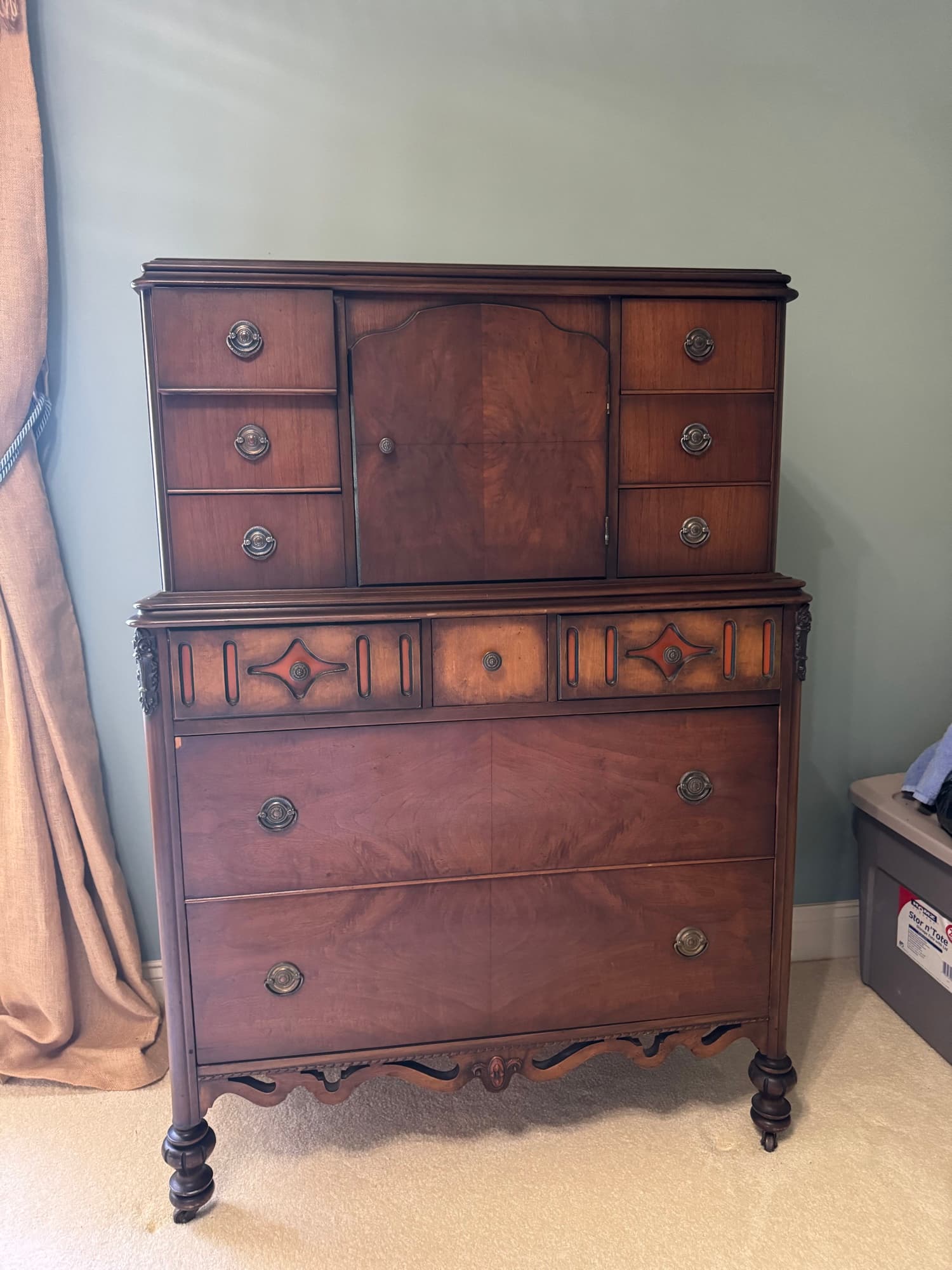
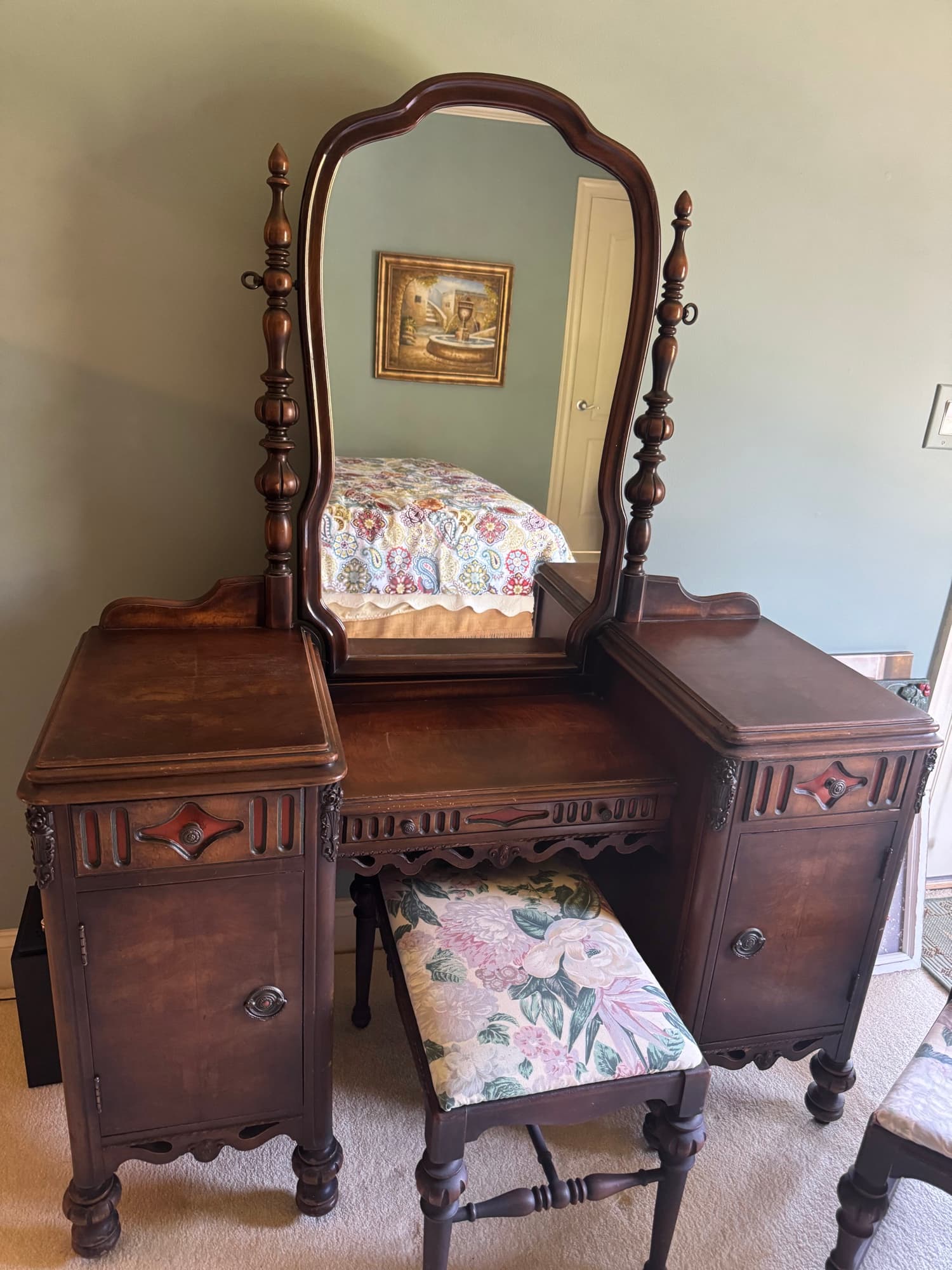
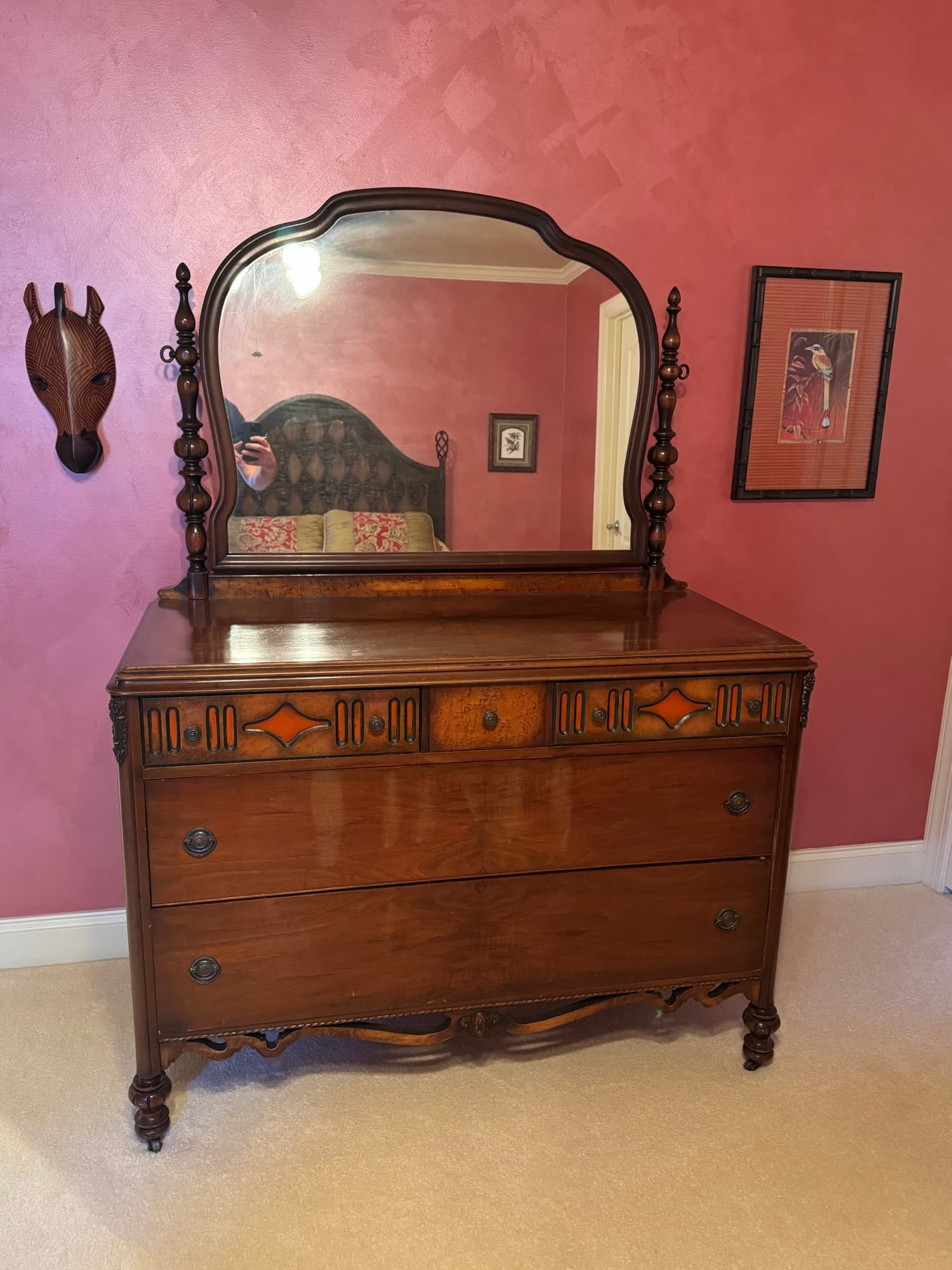
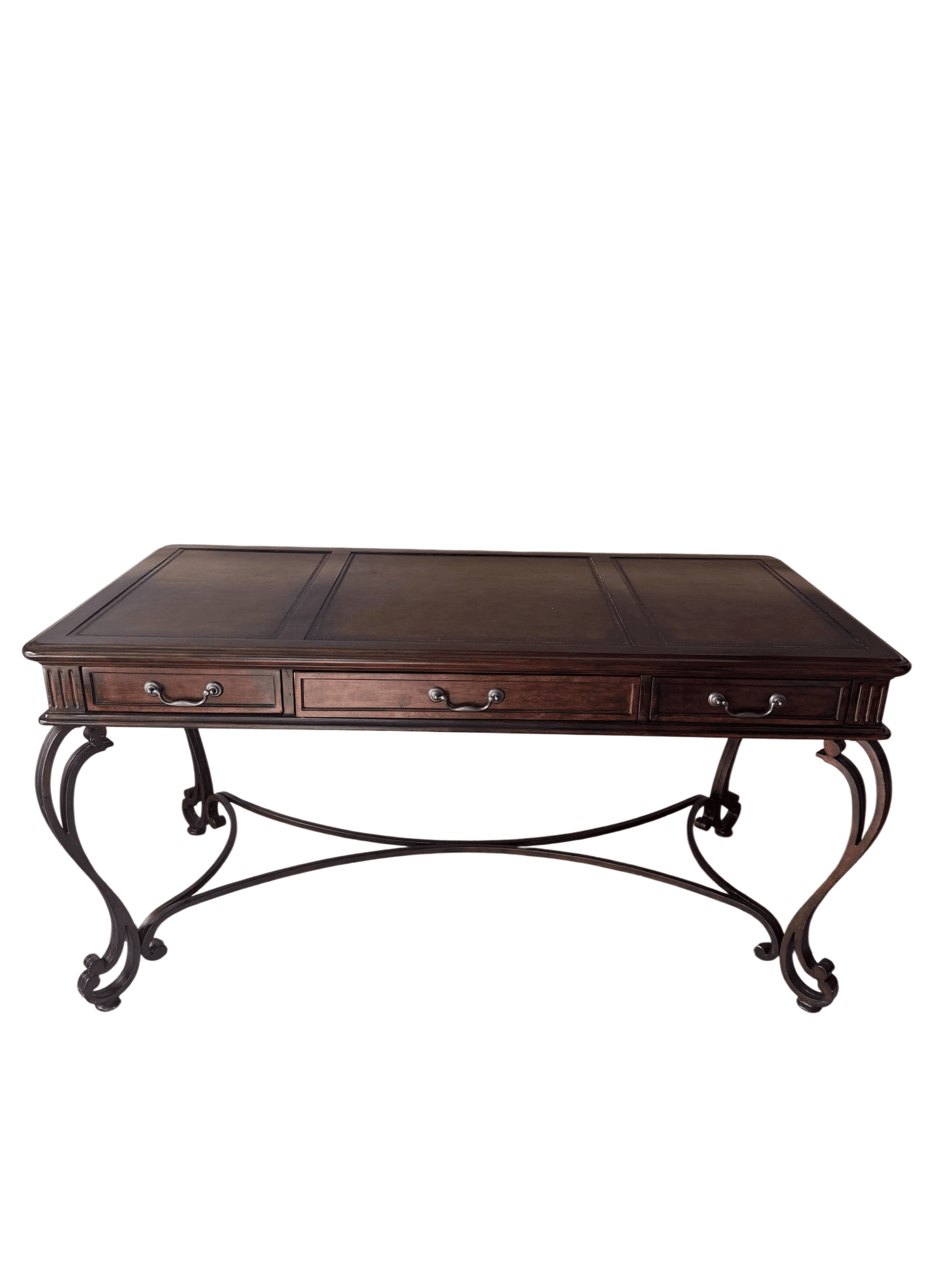
This was a retirement move — North Carolina to Florida, out of about 4,200 square feet and into a smaller, brighter house with a completely different look. They did not want the antiques. Decades of 1920s walnut bedroom furniture, a set of inlaid mahogany bookcases, a leather-top writing desk on wrought iron: good pieces, every one of them wrong for where they were going. This is precisely the moment furniture like that gets given away or hauled off, because big brown furniture has a reputation for being unsellable and nobody in the middle of a retirement move has the time to test the theory.
What we did
We inventoried the house room by room and photographed every piece where it stood, before anything was moved or emptied. Each one was priced against completed-sale comparables rather than wishful asking prices. Pieces that belonged together stayed together as lots instead of being split for a theoretical per-unit gain, and the whole group went up on our own storefront — with anything that suited a local buyer priced for one, since freight is what kills a furniture sale.
The outcome
The reputation is wrong: the antiques sold. The walnut bedroom group went in a single day, the mahogany bookcases and the leather-top desk shortly after. They kept 85% of every sale, moved to Florida with the furniture they actually wanted, and paid nobody to haul away the furniture they did not.
We never publish a client's name or address. The photographs are our own catalog shots of the pieces themselves, taken while we inventoried. Every figure below is a real completed sale from our own ledger, linked to the item it belongs to.