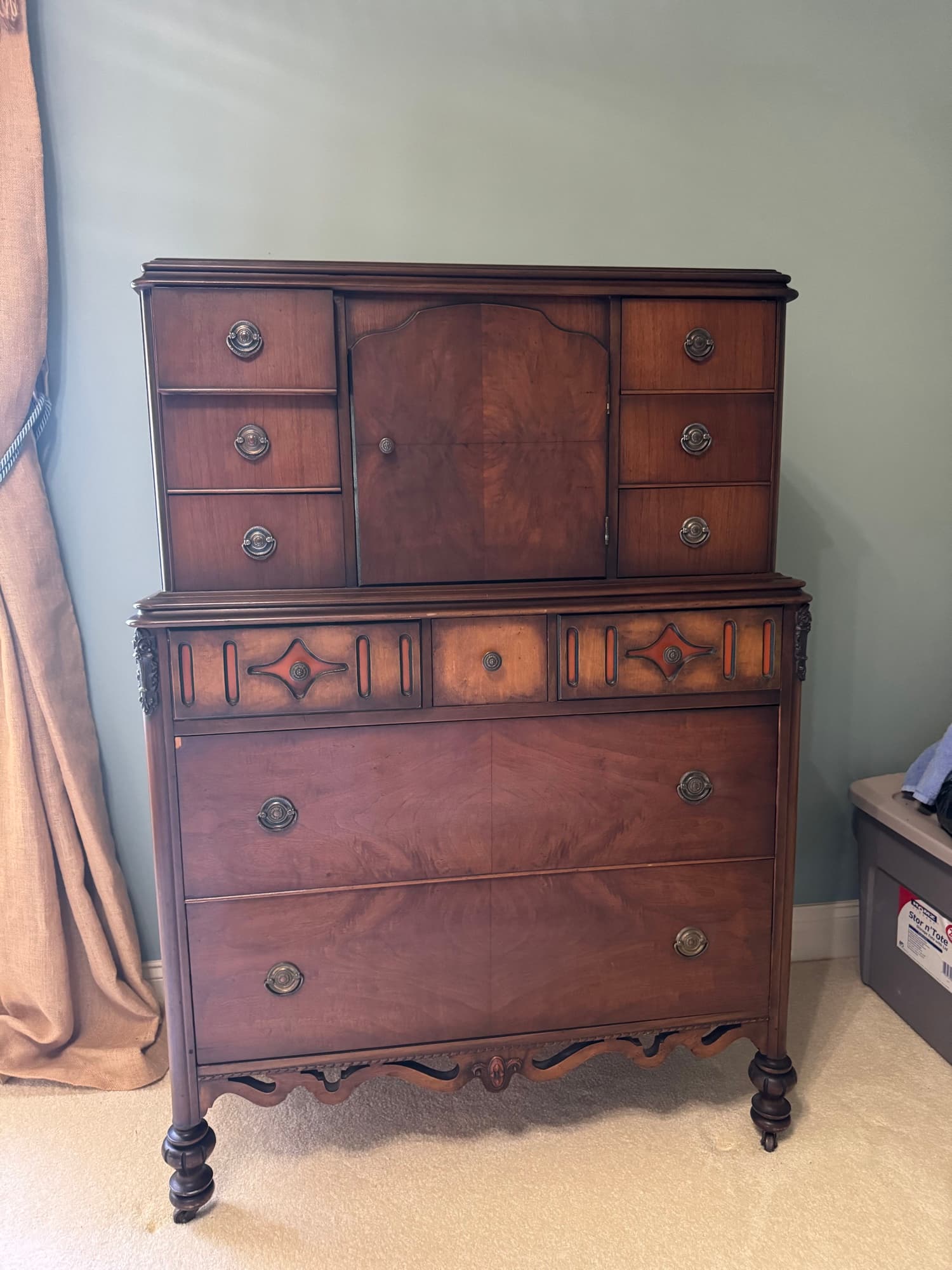
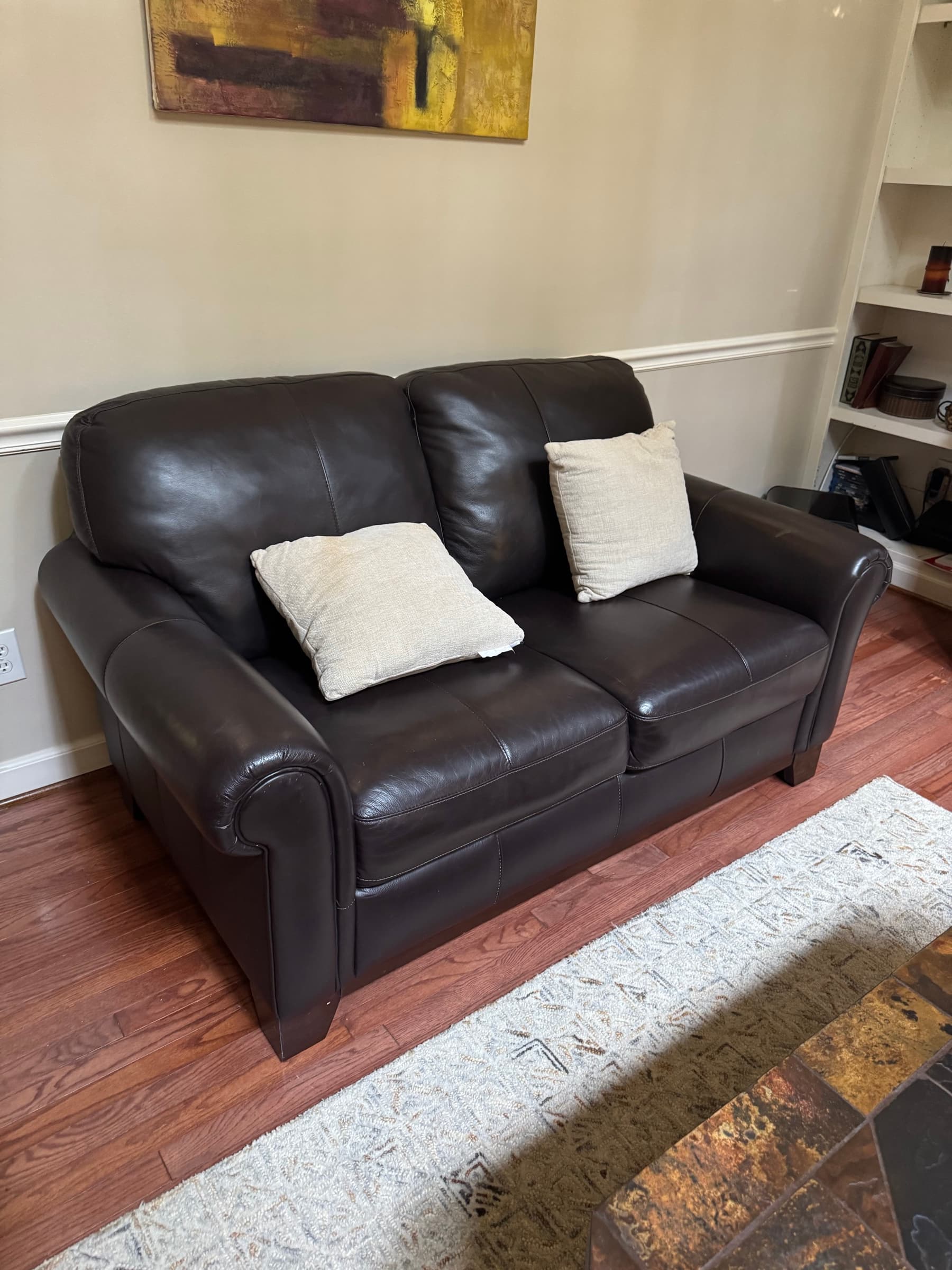
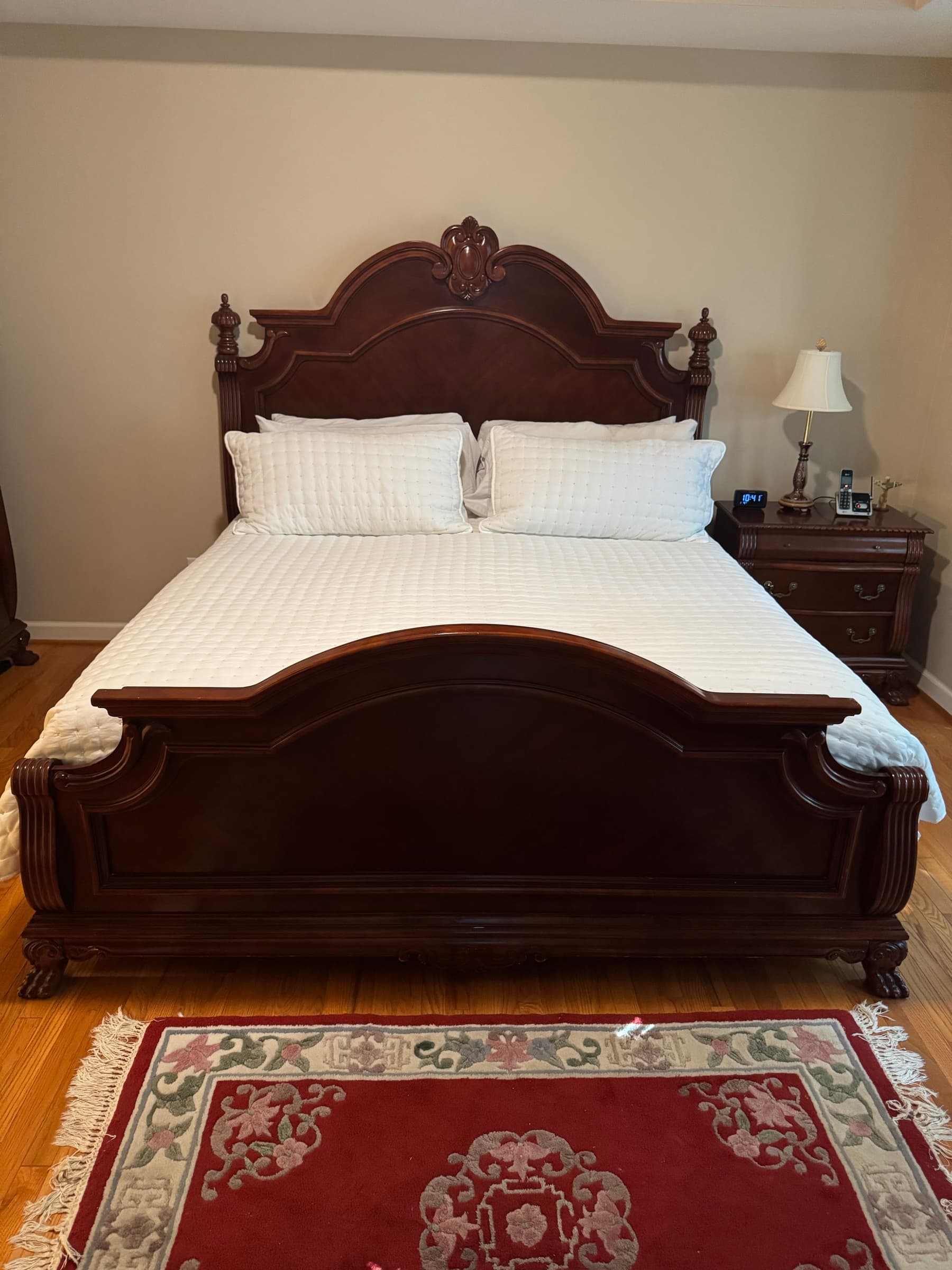
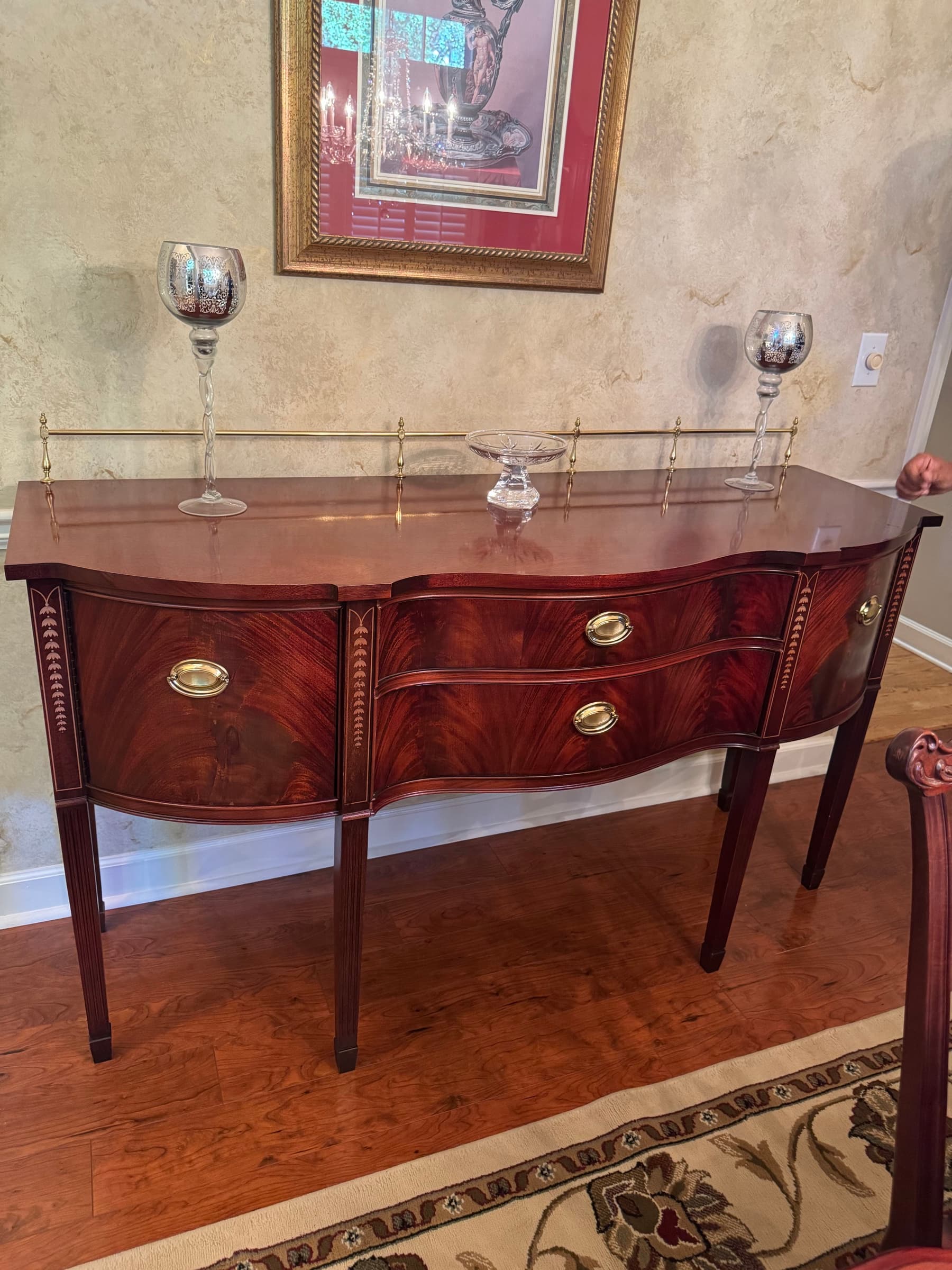
Going through a parent's belongings is slow and emotional, and the usual shortcuts cost money. A junk crew bills you to haul away things that would have sold. A weekend sale marks everything down on Sunday. Doing it yourself takes months of weekends, and most people stop halfway.
The step that saves money is the one people skip: finding out what is there before deciding what to do with it. We photograph and identify the contents, check anything promising against what the same things are actually selling for, and give you a practical value for each piece worth selling. The rest gets an honest answer too, including the hard one that the dining set is worth less than the tools in the garage.
With that in hand, you decide. Family members take what they want. What has value is sold on whichever channel pays most for it, from our own shop to eBay, Chairish and Facebook Marketplace. What does not sell is donated with itemized receipts, and only what is left gets hauled.
You keep 85% of what sells, after sales tax and marketplace fees, and see every sale on an itemized statement.
What inherited things are usually worth.
Every house is different, but the same patterns come up again and again in the houses we work in:
1.Often worth more than expected
Tools and shop equipment, mid-century and solid-wood furniture, sterling silver, older electronics and cameras, quality rugs, signed art and well-kept collections.
2.Often worth less than expected
Formal dining sets, china cabinets and their china, large brown bedroom suites, encyclopedias, figurines and most crystal. Some still sell, usually as lots and for less than the family remembers paying.
3.Needs a specialist
Fine jewelry, watches and anything that may be a valuable painting. We flag these for a credentialed appraiser rather than guess.
4.Keep, not sell
Photographs, papers, letters and the things that matter to the family. Set aside first and never valued.
See what has sold recently for real prices on real pieces, or read how two Charlotte households went about it.
How it works.
Leave everything where it is
Please do not sort or throw anything out before we see it. That is how valuable things end up in the donation pile.
Free walkthrough
We walk the house with you, or with whoever has the key if you live elsewhere, and agree what the family is keeping.
Written plan and quote
What is worth selling, roughly what it should bring, and what selling and clearing the rest involves, in writing before any work starts.
We sell, donate and clear
You approve every price. Each sale lands on an itemized statement; donations come with receipts.
What the family receives.
- ✓An honest answer on what is valuable and what is not
- ✓Photographs and a practical resale value for each piece worth selling
- ✓Specialist items flagged for a credentialed appraiser
- ✓Sales across the channels that pay most for each category
- ✓Your approval on every price before it is listed
- ✓Itemized donation receipts and an itemized statement for every sale
Why VaultXL.
We look before anything leaves
Nothing is hauled until it has been checked for value. That is the whole point.
Real sold prices, both ways
We price from what things actually sell for now, which is also how we tell you, kindly, when something is not worth what you hoped.
Lots, not a fire sale
Related pieces stay together where that sells better, and nothing gets marked down on a Sunday afternoon.
Fine from another state
Plenty of families never visit during the project. Approvals and updates come by phone and portal.
Where we serve.
Charlotte · Myers Park · Dilworth · Eastover · SouthPark · Cotswold · Ballantyne · Matthews · Mint Hill · Huntersville · Cornelius · Davidson · Concord · Gastonia · Waxhaw · Fort Mill · Rock Hill
Start with a walkthrough.
A free walkthrough in your home, then a written quote before any work starts.
Frequently asked.
Have them looked at before anything is sorted or donated. We photograph and identify the contents and check anything promising against what the same items are currently selling for. You get a practical value for each piece worth selling, and specialist items like fine jewelry are flagged for a credentialed appraiser.
Decide what the family is keeping first, then find out what the rest is worth before donating or discarding it. Sell what has value, donate what does not with receipts, and clear only what is left.
Some is. Mid-century, solid-wood and well-made pieces often sell well, while formal dining sets and large brown bedroom suites usually bring less than families expect. We will tell you which you have before you decide.
No. Keep what you want, give things to family, and have us sell only what you choose. The walkthrough is free and commits you to nothing.
Everything is quoted in writing after a free walkthrough, before any work. Selling carries a non-refundable setup fee set in your written quote and a 15% commission on what sells, after sales tax and marketplace fees. You keep 85%.
Yes. A family member, neighbor or realtor lets us in, you approve prices by phone or through a portal, and you are paid electronically.